Thursday, September 27, 2012

Motherland


“Rothenburg ob der Tauber 4 km,” a sign announces as the car drifts to as stop at a “T” in the road. Samuel puts the car into gear and I rouse myself from a nap as we lurch forward and turn left. I crank up the seat to an upright position to catch a glimpse of the rolling hills of corn and wheat.

One century ago, a great grandfather of mine emigrated from this town according to my cousin’s research. My late grandmother’s stories placed her father’s hometown as Nuremberg, which with the approximations of an elderly memory suggest the little town of Rothenburg, about 80 kilometers to the west, as a probable place. Both of her parents immigrated to the United States as adolescents together with their families, leaving the rolling hills of Bavaria far behind for a new life of economic opportunity in Baltimore.
As a child, I obsessed over this distant ethnic identity as a German. It was one of my fascinations I fell into with a deep, though ephemeral intensity. I acquired a German flag for my collection, a book that I never read on Adenauer, the German leader during the reconstruction after World War II, and a pocket-sized German dictionary, which fit conveniently into my pencil box so that I could look up important vocabulary like “geschlecht” during the school day. I repeated the few German phrases that my mother taught me like mantras passed down from her grandparents:

Sprechen Sie Deutsch?
Ich spreche kein Deutsch.”

The town emerges from the farmland first as a gas station and set of shops, then in its medieval splendor, complete with town wall, moat, and watchtowers. We park on the side of the road and follow a path around to the main gate where a cobblestone street flows in lined with old Tudor houses with signs indicating restaurants and shops. We walk into a restaurant and order a pizza to go. We have 15 minutes to explore before the pizza is ready and then we must return to the road. Samuel amuses himself by playing the role of tour guide and pointing out various sights of supposed relevance to my family history. “…And this is your great grandfather’s house, here the well where he drew his water…”
Samuel tried to talk me out of our detour here while we were stuck in traffic several times on the autobahn around Stuttgart, but I tried to convey its importance to me, which he found a little funny, since I have no living relatives here. He graciously accommodated my desire however by making the one-hour detour on the way to his family reunion in the north.

Rothenburg ob der Tauber was founded in the 12th century and prospered until the Thirty Years’ War when the Count of Tilly, commander of the Catholic League, decided to quarter his troops there. Rothenburg was a Lutheran city, but easily overcome by the troops who left it empty and impoverished after their several month stay. The Black Death arrived a few years later and virtually wiped out the remaining residents, leaving the town as a fossil not uncovered until the 19th century by artists and tourists. The Nazis adopted Rothenburg as the archetypal German hometown and the state leisure organization arranged frequent day trips for the masses from all across the country.

We walk down the hill to the black stained stone of St. James Church before turning around to meet a hoard of Japanese tourists about to attack the gothic structure with their cameras. We sneak around them and climb back past the numerous gift shops, restaurants, bars, and inns inviting us in with multilingual chalk signs placed on the cobblestone street towards where our pizza waits for us. I snap a few photographs and we take our pizza outside of the city wall where we find a bench to sit and chow down. I gaze back at the city as we walk to the car and prepare for the long journey north to the Sauerland, where Samuel’s family still lives.

The next morning we arrive at the wooden gate of his uncle’s retreat. There are two fish ponds fully stocked with trout fed by the stream at the back of the property and a small lodge in between with its door open and several people loitering outside. Smoke issues from a charcoal grill and the scent of freshly grilled sausage wafts through the cool air. The people approach us with handshakes and hugs and I am introduced to a series of aunts, uncles, and cousins as a friend visiting from America. We set up our tent beside the stream and settle down to a meal. Samuel’s elderly grandfather is eager to try his broken English out on me by telling stories from his life, much to the amusement of the others. After eating and taking a rest, I decide to go for a run in the countryside.

At my grandfather’s funeral the priest called my cousins and I up to the altar for his homily. He explained the symbol of the candles on the altar representing Christ.

“Candles provide light just as Christ was the…?”
“Candle!” I blurted out.
“Not quite,” the priest said.
“Light of the world!” said my Catholic school educated cousin.

A dirt path adjacent to the stream eventually pours into a paved road. I follow the road as it meanders between sloping pastures without a car or person in sight. I breathe in the fresh air warmed by the afternoon sun and continue to a “T” in the road. A small white chapel sits in the grass across from the intersection. I enter through a gate and look through the open door of the chapel. There are two or three candles flickering before an image of Mary holding the infant Jesus. I lower myself onto the kneeler and fold my hands intending to pray, but no words come. I stare at the rather uninspired icon of the holy mother for a moment before standing up and turning to a bag of tea lights placed on a shelf on the right wall. I strike a match and place the candle on the altar, silently departing to continue on my way.

Jubilee Neighbors Summer Camp 2012


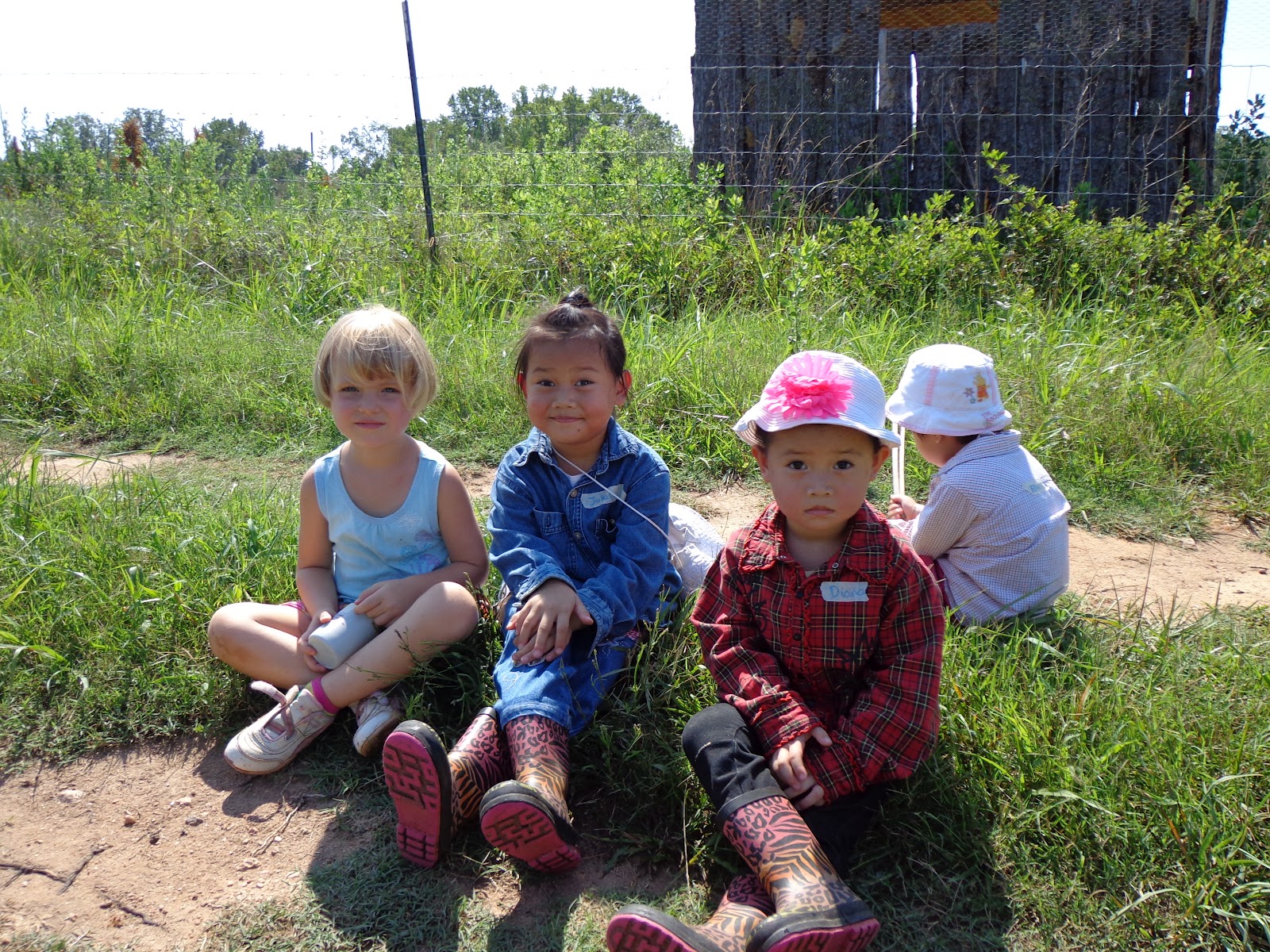
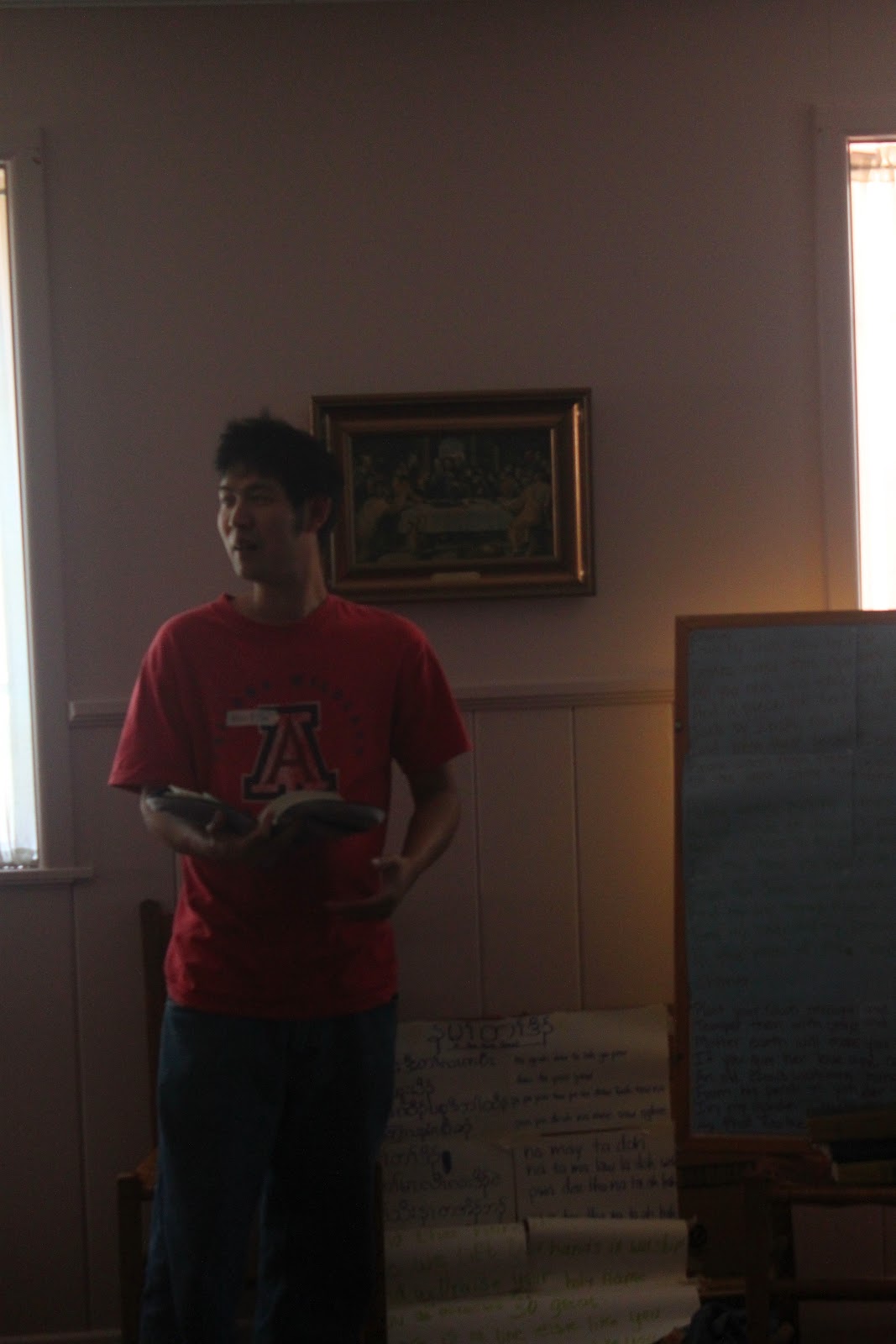
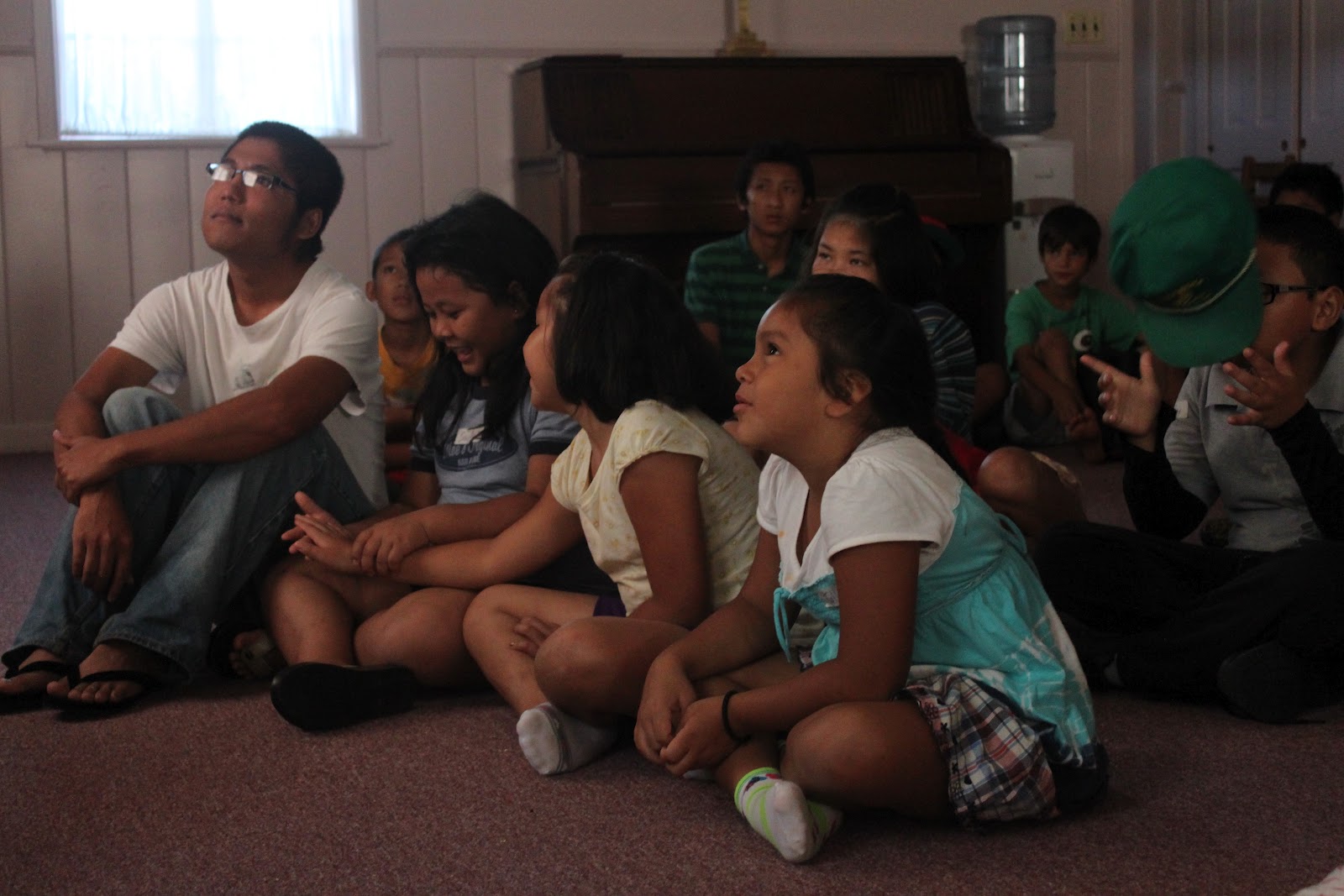
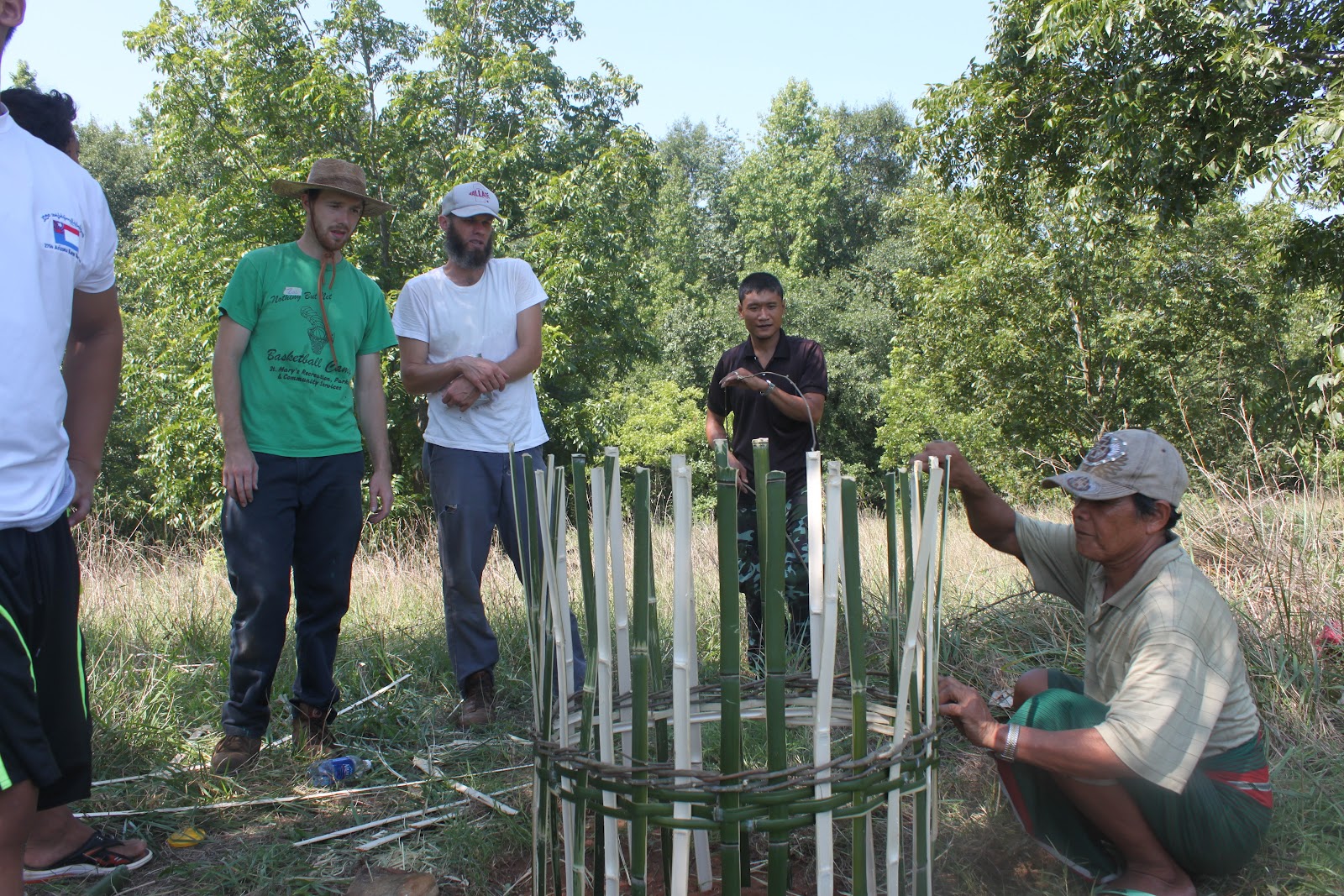
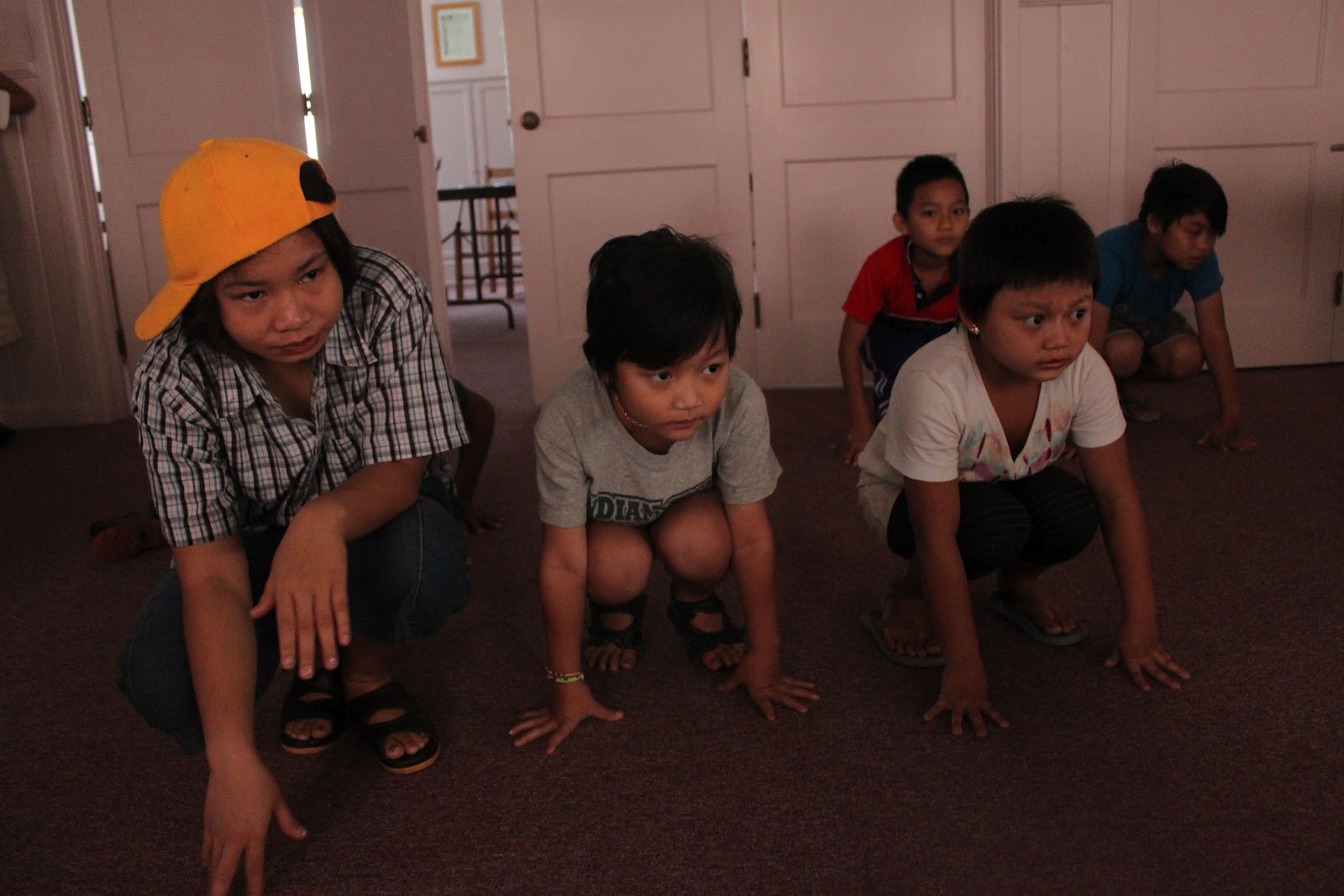
This summer the first ever Jubilee Neighbor’s summer camp, hosted 28 young campers from Comer and the surrounding area. Held at Comer United Methodist trough the great hospitality of the parish, the camp welcomed children ranging in age from 3-12, from diverse backgrounds, many being the children of refugee families from Burma.  The camp ‘theme’ was centered on gardening and God’s goodness as witnessed through nature. Activities also included a strong emphasis on language learning. Each day the campers sang songs and read scripture in three different languages: Karen, Spanish and English. Additionally campers took part in phonics based language classes in these three languages. Memorable activates of the week included playing cooperative games with a giant parachute, ‘field trips’ to Jubilee neighbor’s field to observe nature using the five senses and collecting trash and natural materials to creatively reuse. Campers used their artistic abilities to help construct a sign for the neighbor’s field and took part in the creation of a tradition Karen- style bamboo compost basket for the field.  Throughout the week campers learned the importance of caring for the land and one another through songs and scripture activates. As culmination, on the final day campers performed the songs they had learned, in Karen, Spanish and English, for an enthusiastic audience at the Comer Farmer’s Market.  Many thanks to the community of Comer United Methodist for making this wonderful week of fun, learning and friendship such a success!

Terese Gagnon, Camp Counselor


Sunday, July 1, 2012

Value

“That will be five dollars,” I say, handing the woman a plastic shopping bag of straight-neck yellow summer squash.
She turns up her nose a little bit, hesitating before pulling a bill out of her wallet, and holding it out to me. These are the first fruits of the season, finally harvested after hoeing up the ground into mounds, pulling grass, planting seeds, watering, mulching with horse manure, and hours of squishing squash bugs and scraping clusters of eggs off of leaves. I look down at the waxy yellow squash in the bag fondly as though they are my children, finally mature and ready to send off into the world. I want to admonish this woman holding out Lincoln’s bony face to me: I hope you can cook. You better not leave these unattended on the stove. You better not cook them in the microwave. Deep fry them. Grill them. Bring out their best flavor. I sullenly hand over the bag and take the bill from her as though trading my livelihood for a piece of paper.

I initially intended to start selling produce from the Neighbor’s Field at Jubilee at the new monthly Clarkston Farmer’s Market on the last Sunday of every month, where many of the growers in the field already have friends and potential customers who would be a good market for some of the specialty crops they grow and could purchase them on EBT. However, as I talked to the growers about the possibility of selling at this new market, many were excited about the idea of selling their surplus produce, but adamant that they did not want to sell anything on a Sunday. One woman told me, “Sah Yay Shu ta eh bah—Jesus doesn’t like it.”
There is great wisdom in the practice of taking a day of rest or refraining from certain practices for a one day every week, but in the world I come from the idea of stores being closed or transactions ceasing on Sunday is an antiquated fantasy. It feels like a tragedy to turn away from such an opportunity as the market simply because of the day of the week. I want to tell my friends in the Neighbor’s Field that the world of no selling and buying on Sundays is dead and that they should assimilate to the modern world. However, If I recall all of my attempts to set aside a day of rest with any consistency, I run up against the reality that all have failed and I often rather fall into the tendency of many Americans to overwork myself and dismiss mindfulness and gratitude as unnecessary luxuries. I decided to start selling at the much smaller and low-traffic Comer Farmer’s Market on Saturday mornings. Several growers contribute their produce to the market table but no one seems to quite share my excitement about the idea of selling their vegetables for supplemental income and perhaps eventually in lieu of the chicken plant.
After bringing in a meager sum at my first market, I return to Atlanta to spend the weekend with some of my closest gaw lah wah friends. Although all of us would claim to be critical of the consumerism in our society, but we spent much of our time together shopping: wandering around downtown Decatur, stocking up at the natural food store, REI, and wrapping it all up with a late night ice cream run. It is as though this demon is wired into our nature. It is the primary skill we possess and the practice that we fall back into unless we intentionally avoid it. We lost something of the intimacy of friendship and time spent together while filling our empty baskets.
Shopping as recreation is the most explicit manifestation of the disease of consumerism. As we give ourselves over to this disease, we surrender ourselves and all of creation at the feet of Babylon. Our economy is no longer based on the simple exchange of goods and the valuing of unique skill sets and resources, but on the lust of corporate empires. We must to find new creative ways to share our resources and abilities with each other in recognition of the relational value of these things, in recognition of the human dignity of the participants in the economy.
The garden welcomes me back at the beginning of the week with new Bermuda grass to pull from the mounds and many more ripe squash jutting out from under the leaves. I kneel in the unkempt dewy grass and pull weeds up by the root from the squash mounds. I pull out a kitchen knife and sever the ripe fruits from the plants, refilling the empty basket from the market with plump yellow squash, which might be fried, marinated, grilled, perhaps even pickled. This is a labor of love which never be compensated by the dollar, but only by the deep peace that comes from willing the land to spring forth with good food.
An old Karenni man meanders down the hill, his head wrapped in a stocking cap and a watering can swinging in his hand, as he does most every morning. I know he cannot speak a even a little bit of English, so I simply wave and smile as he enters the gate and he holds up his hand in return before loosening the spigot to fill his watering can. We come to this field with unspeakable wounds, but in working this soil, there is healing.

Monday, June 4, 2012

Partner

He holds up his index finger to show a deep jagged cut across the tip marring his distinctive pattern.

“Chicken bone,” he says, chuckling. “Green card office ta eh weh bah. Ya bah leh ga dah gay luh kee ta blaw—The green card office did not like this. I have to go back again later.”
Na hay na supervisor lee ta bay nayahh—Did you give your supervisor that paper?” I ask pointing at the excuse paper from the green card office.
“Yes. She say ‘I don’t want.’ Very angry.”

During orientation at the chicken plant, new hires are referred to not as employees, but “partners.” “Partners” share in the wealth of the company with their hourly wage and share in the common mission of creating “product.” They are partners in the work and the wealth of an industry continuing to boom despite the economic downturn.
I first recall hearing the word “partner” in elementary school when assigned to work in conjunction with another student. This meant completing a science experiment together or peer-editing each other’s writing. It was sometimes a relationship of unfortunate dependence. We later learned its sexual connotation, which never failed to be a source of humor in the classroom.
“Partner” originates from the Old French word parçener, meaning “a joint heir.” The French word is derived from the Latin partitionem, from which we get the English word “partition,” expressing separation or division. Carrying such an etymology, words cleverly probe employee’s perception of their position, not as exploited labor, but as bourgeois recipients of a shared inheritance. The usage of such language incarnates the exploitation by attempting to disguise slavery as dignified work.

“Welcome to America. We want you to be our slaves!” So expressed one of my close friends as the experience of resettlement in the United States. Yet he punctuates such statements with a fertile gratitude, often, much to my dismay, referring to the United States as “the land of opportunity.” I have a right to my cynicism given the history of oppression and exploitation in this country in the name of “opportunity,” just as my friend is justified in his anger at the subjugation of his people despite promises of a new life of dignity, yet these sentiments are only of creative value if they are used to fuel the creation of a new economy.
We need to recover the notion of our country as “the land of opportunity,” as a hopeful notion of this place as a realm of creative possibility. The land itself, refusing to become desert despite years of cotton monoculture proclaims this hope.
“Opportunity” comes from the Latin phrase ob portum veniens, which means “coming toward a port.” It is no wonder that the immigrant would imagine America as “the land of opportunity” while coming into harbor in New York or landing at Hartsfield-Jackson International Airport. We who would refer to ourselves as Americans are obliged to remember the circumstances of our arrival in this foreign land. The demon who drives us into despair, forgetfulness, and inattention is the demon who exploits the newly arrived with inhumane labor. Let us retreat from our fluency to unknowing and see our surroundings with new eyes, humble eyes, which cannot fathom ownership. Let our speech become silence that we ourselves may come into port, arrive in our own milieu. History is writing itself as we speak.
The great Sufi poet Jelaluddin Rumi speaks thus via contemporary translator Coleman Barks:

Out beyond ideas of wrongdoing and rightdoing,
there is a field. I’ll meet you there.

When the soul lies down in that grass,
the world is too full to talk about.
Ideas, language, even the phrase each other
doesn’t make any sense.

This inheritance refuses by its very nature to be partitioned. To be an heir of opportunity is to share in the unbounded creative possibility of fertile land. We construct our fences, but without fail the wires will rust and crumble. Our divisions in the face of time prove themselves to be only figments of our imagination, property markers to make us feel separate and secure. In this field, there can be no boundaries, no partnership, only union.

Pa ga oh peh ee du luh pa say oh, pa ga pway hee ta pluh peh ComerWe will stay here until we have money and then we will buy a house in Comer.”

Pa ta tha law tah ta mee mee ah ah, bah hsa pa loh bah hee ta pluh—We don’t want many things, but we need a house.”

Wednesday, May 9, 2012

Tourist

“Excuse me, but are you from Asia?” the African-American guy sitting next to me at the lunch table asks with a confused look on his face.
“Haha, no I just speak a little bit of Karen, their language.”
“Oh. I was gonna say. You didn’t look like you were Asian. What is that?”
“Mung bean sprouts,” I say popping one of the crunchy little white shoots into my mouth, “Do you want to try one?”
“Nah…well…I suppose I oughta try just one,” he says, putting down his bag of Doritos. He picks up one of the little plants and looks at it as though it is an alien larva before taking a bite. “Mmm. Alright. I have never had anything like that before.”
“Right now the best food is in the woods,” Eh Kaw chimes in, “green briars.”
“Say what?”
“Green briar shoots: the young tips of the thorny plants in the woods that are coming in right now. They are a tender and a little bit sour. Very good,” I explain.
A bowl of young sweet gum leaves and green briar shoots makes its way down from the other end of the table for the man to try.
“Nah… I think I am ok.”
“You sure?” Eh Kaw asks, “At least try the green briar.”
“OK,” he says, nibbling on one of the shoots, “Hey, not bad! Thanks.”
RINGARINGARINGARINGARING! Everyone stands up and prepares to return to the floor.

The chicken plant is a strange patchwork of tight-knit cultures. Karen friends are often eager to share with me the several words of Spanish, Kiswahili, or BVE colloquialisms they acquired during their labor in the meatpacking plants of Georgia. Employees maintain the most ardent allegiance to their own group, yet many practice a glib comraderie that transcends those boundaries.
Perhaps the strangest thing about my sojourn at the chicken plant to my co-workers was my seeming membership in a group visually not my own. Everyone has their niche and for many it is their cultural niche that secures their employment at the plant in the first place. I arrived as a participant-observer of sorts, which was not unapparent to my co-workers. I arrived unable to blend into my group, unable to lose the attention attracted by my individuality.
I framed employment at the chicken plant as an experiment in solidarity, an intentional move out of love for my Karen brothers and sisters, and certainly a new experience. Yet participating in this new milieu necessitated seeking a sense of belonging. I in fact relied as a recipient on the solidarity of my Karen friends with their younger white brother.

I often hear of mistreatment by black and Latino co-workers and witnessed first hand several incidents in which black and Latino workers would interact congenially with one another or me as a white man and then turn around and issue caustic treatment to internationals. My black supervisors were also not hesitant to treat me rudely, established in their position of superiority. Feeling drawn into membership in the Karen community at the chicken plant, I myself began to feel some of the disdain my friends have expressed to me for their black and Latino co-workers because of mistreatment.
My educational and cultural background trained me to regard racism as a folly of the ignorant, yet stepping out of my “white-as-anethnic” sensibility it becomes a real demon to contend. When your own individuality is dissipated by membership in a close-knit cultural body, it is not reasonable to regard consistent mistreatment by others belonging to another cultural body as individual aberrations. There is indeed a culture of abuse. Yet to regard all people with a particular physical appearance as culprits in said culture would also be in error. This is the error of racism: failure to discriminate between distinctive cultures.
Is it ethical for me to consider “joining the tribe?” Is this a failure to discriminate between my experience of comfortable affluence and the refugee experience of the Karen? Certainly there is a gargantuan gap to be acknowledged here, a seemingly irreconcilable void, yet to regard it as essential is this same failure, which deems cultures as absolute. Our memory is always available to the mediation of new experience. This is our essential human freedom—the invitation to the path of salvation (healing).
I can never truly know the plight of the Karen because I have the freedom to leave. My foray into the working class was insulated by the fact that my termination was of little consequence to my quality of life. But even when a tourist comes across fertile ground, he must criticize the conditioned impulse to capture it in a snapshot and return to the rocky soil where produce comes in on trucks and gets sold in supermarkets. As ludicrous as it may seem, he must consider the possibility of throwing away his passport and planting some seeds just to see what germinates.

In wake of the sudden end of my employment at the chicken plant, Naw Say invites me to follow her to pick strawberries for a local farmer in the evening. We drive up a dirt road to the gate and she gets out to open it. I drive into a verdant enclave of trees and shrubs where we are greeted by two smiling faces. “Ha luh ghay?” the man tries.
Uhh, Ha luh a ghay” Naw Say replies, laughing in appreciation.

He hands us each a stack of shallow boxes and we follow him down the hill to the strawberry patch.

“Where is Pa Saw Paw today?” he asks.
“She had to stay at home with her kids, so I came in her place,” I tell him.
“Well thanks for coming to help.”
“Sure. I am happy to be here. This place is beautiful.”
“Yeah. We really lucked out. What kind of work do you do?”
“Well I worked at the chicken plant in Athens for one month, but I just got fired for being too slow.”
“That’s a hard place to work,” he says.

Words like “solidarity,” “intentional,” and “downward mobility” swirl about my brain, but I cannot seem to put them together in a sentence to show that I have a college degree, so that he will recognize that I am not actually a low-class worker. Solidarity undoes itself when it is approached as a purpose unto itself. Buried beneath my shame is the only wealth I have.

“So pick only the berries that are completely ripe…No yellow or white,” he instructs me. Naw Say is already a quarter of the way down her first row as I begin searching under the first plant.

Tuesday, April 24, 2012

Eggs


I plunge my hands into another green plastic tub of nuggets and pull up with pieces of chicken  hanging from my fingers like fleshy rosary beads. I fling the product back down into the tub in disgust. No yellow dot for this one. I pull a hold tag out and scrawl “CUT THROUGH” in all capital letters. I am on a crusade against strung-together nuggets. My supervisor told us that the customers are complaining about this, so we are to tag any tub we find with more than two connected pieces. I make it my mission to save the reputation of the chicken plant and impress my supervisor with my high standards and unrestrained holds. I carefully mark another tally on the hold log, trying to save the white paper from the raw chicken goop on my glove.

“YOU’RE TAGGING EVERYTHING MAN!” yells one of the runners, angrily pulling the tub I tagged off of the line.

“IF IT LOOKS BAD, I TAG IT. I AM JUST TRYING TO DO MY JOB!” I reply. I want to say something to him about how this whole place is built on taking advantage of people and the way to subvert that is not through carelessness but obedience, but all he seems concerned about is the extra work I am creating for him by placing so many holds. One of the unanticipated effects of this is the extra work I create for myself: a steady stream of rejected tubs coming back for rechecks, keeping the line backed up at DSI 5. My co-worker, Roberto, appears suddenly beside me and begins pulling product to weigh at my station.

“HILDA TOLD ME TO TAKE OVER LINE FIVE HERE. SHE WANTS TO TALK TO YOU IN THE OFFICE.”

I take off my gloves and walk up the steps of the foot bridge over the conveyor, through the series of plastic flaps, past a giant crate of discarded chicken dyed pastel blue, and into the QA office. I am relieved to have a break from the constant work of the line, where my brain was struggling to keep up with my hands, but unnerved by my assistant supervisor’s sudden interest in talking with me. Most days she does not even reply to the “Good morning” I greet her with in the office at the start of the day. Most of my questions regarding work or the location of needed supplies are typically met with a rude response implying that I should have already known the answer to my own question. I walk into the office where she is making more hold tags.

“Roberto said you wanted to talk to me?”
Without looking up from her work she says, “Go back to the line. I will come and get you. Just stay off of line 5.”

Caught in the familiar gap between obedience and initiative, neither of which are sustainable traits in this place, I return to the line in frustration. DSI 1 is the only unoccupied station, where there is only one tub awaiting inspection. I stir the product, weigh thirty fillets, affix my yellow dot, and slide it onto the line. I lean against the counter, waiting anxiously for my assistant supervisor or another tub to inspect.
Hilda strolls out onto the floor. After five or so minutes of socializing with fellow supervisors, she calls me with her hand. She maintains her usual morbid silence as she leads me back to the office. When we arrive, she tells me to sign in my pen and thermometer and watches impatiently as I do so.

“Follow me,” she says. We cross the production floor again and exit to the front part of the building where we turn into the human resources office. Hilda escorts me to a room where my supervisor and one of the human resources personnel sit waiting for me.

“As you know, the first forty-five days are a probationary period. It seems as though you are not a good fit for the QA position, so we are going to have to let you go… I am going to need your ID card. Your supervisor will clock you out,” the man in human resources tells me in a practiced voice. I turn to my supervisor, remembering the many times I asked him for feedback to no avail.

“Can I ask why?”
“Well, speed. The line was always getting backed up. I got called out to the floor five times because of you! And you failed to fill out the weight histogram correctly.”

By this time everyone is on lunch break and so I go into the cafeteria, but cannot bring myself to sit down to lunch just yet, so I go into the bathroom, shut myself in a stall, and surprise myself as I fill the toilet bowl with tissues full of snot and tears. It hurts getting fired, even from such dismal work.

The next day was supposed to be my first mandatory Saturday overtime in my month-long career at the chicken plant. Instead, I take my usual morning stroll to the Comer Farmer’s Market where Corey tells me Baw Baw has been trying to call me because her stomach hurts. Knowing she is nearing nine months, I walk quickly over to her house, knock on the door and walk in. Baw Baw stands in the living room clutching her belly.

“My baby brother is coming!” Blay Blay says.
Ya gaw na ta blu blaw leeeh. Na ta paw phone ba ma nu leh—I called you many times already! Why didn’t you answer?” she asks.
“Did you call Sue already?”
Uhh. Ya te aw he luh a na ree ta hsee ta kaw, bah hsa ya hso ga moh Wisdom ga oh pleh hsoo nya—Yes, I told her to come at 10:30, but I think Wisdom will be born very soon.”

I quickly call Sue at Jubilee and tell her to come now to take Baw Baw to the hospital as I prepare to watch the other four kids and try to get in touch with Hei Nay Htoo at the chicken plant. Russ and Christina at Jubilee volunteer to watch the kids so that I can take Hei Nay Htoo to the hospital. I agree to take over watching the kids Sunday morning until their parents get back from the hospital.
Wisdom Yoha Htoo is born 8 pounds, 11 ounces on Saturday, April 14, 2012 at 10:58 AM at Athens Regional with no complications. Hei Nay Htoo and I arrive shortly after the birth. I am then sent on a mission to find rice and Mama noodles.
The next morning I drop scrambled eggs into hot oil and watch the yellow mixture puff up as it fries. I place the fried eggs on the table with rice, Sriracha, sliced fruit, and five plates. Wonderful, Blay Blay, Hae Tha Blay, Ga Pu, and I sit down on the floor around the table to eat breakfast as we wait for Wisdom to come home.